Credit cards are one of the most common financial tools in the United States. They offer convenience, flexibility, and the ability to manage short-term expenses. However, they can also lead to significant debt if balances are not paid off regularly.
Over the past few years, credit card debt in the U.S. has steadily increased. Rising living costs, inflation, and higher interest rates have contributed to growing balances for many Americans.
Understanding the average credit card debt in the U.S., how it varies by age group and state, and what factors contribute to rising balances can help consumers make smarter financial decisions.
Total Credit Card Debt in the United States
Credit card debt in the United States has reached historic levels.
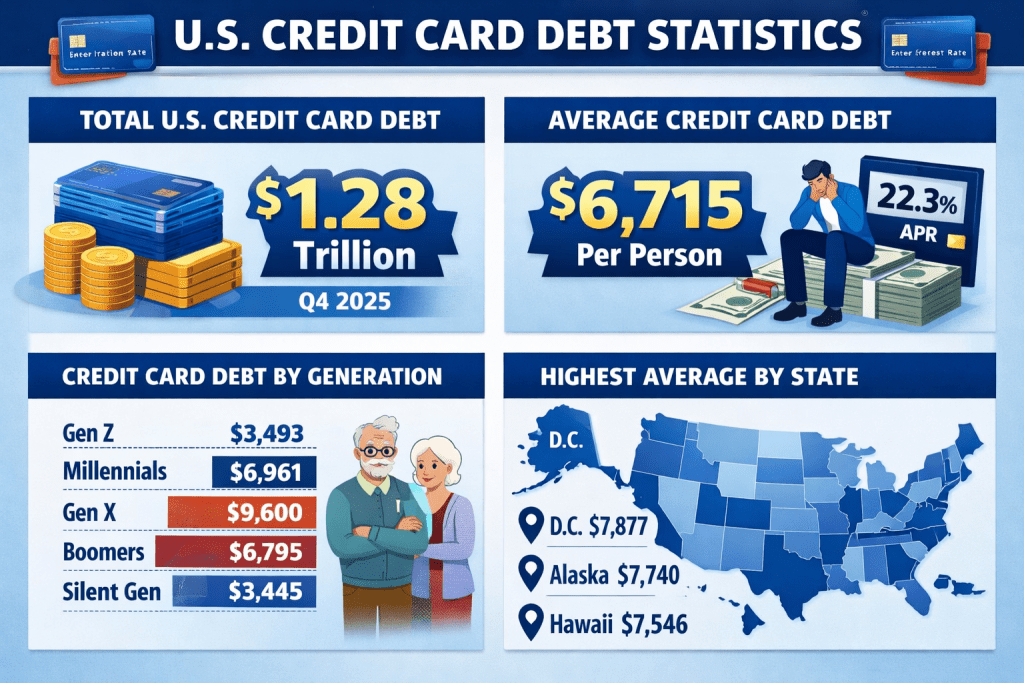
According to Federal Reserve data, Americans collectively owed approximately $1.28 trillion in credit card debt as of the fourth quarter of 2025. This represents a dramatic increase compared to previous years and highlights how widely credit cards are used for everyday spending.
This record level of debt reflects several economic factors, including:
- Rising cost of living
- Increased consumer spending
- Higher interest rates
- Greater reliance on credit to manage expenses
For many households, credit cards are used to cover unexpected costs such as medical bills, car repairs, or emergency expenses. While credit cards can provide short-term financial relief, carrying balances over time can significantly increase the overall cost due to interest.
Average Credit Card Debt Per Person
While total national debt sounds overwhelming, the average balance per individual is a more practical benchmark.
According to credit reporting agency TransUnion, the average American carries about $6,715 in credit card debt as of December 2025. (Forbes)
This amount increased slightly from the previous year, indicating that many consumers continue to rely on credit cards to manage expenses.
However, averages don’t tell the whole story. Some consumers pay off their balance every month, while others carry much larger balances that accrue interest.
Credit Card Interest Rates and the Cost of Debt
One of the biggest challenges with credit card debt is the high interest rate.
The average credit card interest rate on balances that accrue interest was around 22.30% in late 2025.
At this rate, carrying a balance can become very expensive over time.
For example:
- A balance of $6,715
- Monthly payment of $150
- Interest rate of 22.30% APR
In this scenario, it could take about 99 months to pay off the balance, and the total interest paid would exceed $8,000.
This example demonstrates how quickly interest charges can grow when balances are carried over time.
Average Credit Card Debt by Generation
Credit card debt also varies widely across different age groups. Some generations carry significantly higher balances due to lifestyle expenses, income levels, or access to credit.
According to Experian data, the average credit card balances by age group are approximately:
- Generation Z (18–28): $3,493
- Millennials (29–44): $6,961
- Generation X (45–60): $9,600
- Baby Boomers (61–79): $6,795
- Silent Generation (80+): $3,445
Generation X carries the highest average credit card debt. This group often faces multiple financial responsibilities such as mortgages, childcare, and supporting aging parents, which can lead to greater reliance on credit.
Meanwhile, younger and older generations tend to carry lower balances. Younger consumers often have smaller credit limits, while older individuals may avoid debt or have already paid down their balances.
Average Credit Card Debt by State
Credit card debt levels also differ depending on where people live.
Some of the states and regions with the highest average credit card balances include:
- District of Columbia – $7,877
- Alaska – $7,740
- Hawaii – $7,546
- Maryland – $7,416
- Nevada – $7,408
Meanwhile, the lowest average balances are found in:
- Wisconsin – $5,346
- Iowa – $5,431
- Kentucky – $5,632
- West Virginia – $5,637
- Indiana – $5,719
These differences are influenced by factors such as cost of living, income levels, and spending habits.
Why Credit Card Debt Is Increasing
Several economic factors contribute to rising credit card debt:
1. Rising Cost of Living
Inflation has increased the price of everyday essentials such as groceries, housing, and transportation.
2. High Interest Rates
Higher interest rates make it more expensive to carry balances, which can slow down repayment.
3. Increased Reliance on Credit
Many households use credit cards to cover unexpected expenses like medical bills, car repairs, or emergency costs.
Together, these factors can cause balances to grow quickly if consumers are unable to pay off their statements in full each month.
How to Reduce Credit Card Debt
For consumers dealing with credit card balances, several strategies can help reduce debt more effectively.
Pay More Than the Minimum
Minimum payments are designed to keep accounts in good standing but rarely reduce balances quickly.
Paying more than the minimum each month can significantly reduce interest costs and shorten repayment time.
Use the Debt Avalanche Method
The debt avalanche strategy focuses on paying off the credit card with the highest interest rate first while continuing minimum payments on other cards.
Once the highest-interest card is paid off, payments are redirected to the next highest balance.
This strategy minimizes the total interest paid over time.
Consider Balance Transfer Cards
Some credit cards offer 0% introductory APR balance transfer promotions. These offers allow consumers to move existing balances to a new card and avoid interest for a limited period.
This can make it easier to reduce debt faster if payments are made consistently during the promotional period.
Build an Emergency Fund
One of the best ways to avoid future credit card debt is to build an emergency savings fund.
Financial experts generally recommend saving three to six months of living expenses to cover unexpected situations.
Having savings available can reduce the need to rely on credit cards during emergencies.
The Future of Credit Card Debt
Credit card debt trends are closely tied to the overall economy. Factors such as inflation, employment rates, and interest rates will continue to influence consumer borrowing behavior.
While credit card usage is unlikely to decline, increased financial awareness and better budgeting strategies may help consumers manage debt more effectively in the future.
Understanding the average credit card debt in the U.S. can help individuals compare their own financial situation and make informed decisions about spending and borrowing.
Final Thoughts
Credit cards can be useful financial tools, but they can also lead to significant debt if balances are not managed carefully.
Understanding how your financial situation compares to national averages can help you make smarter decisions about spending, budgeting, and debt repayment.
By adopting responsible credit habits and creating a clear repayment plan, consumers can regain control of their finances and reduce the long-term impact of credit card debt.